·By GIVE A SH!T®

Natural cat wipes: a vet-reviewed guide to lick-safe ingredients and plant fibers (2026)

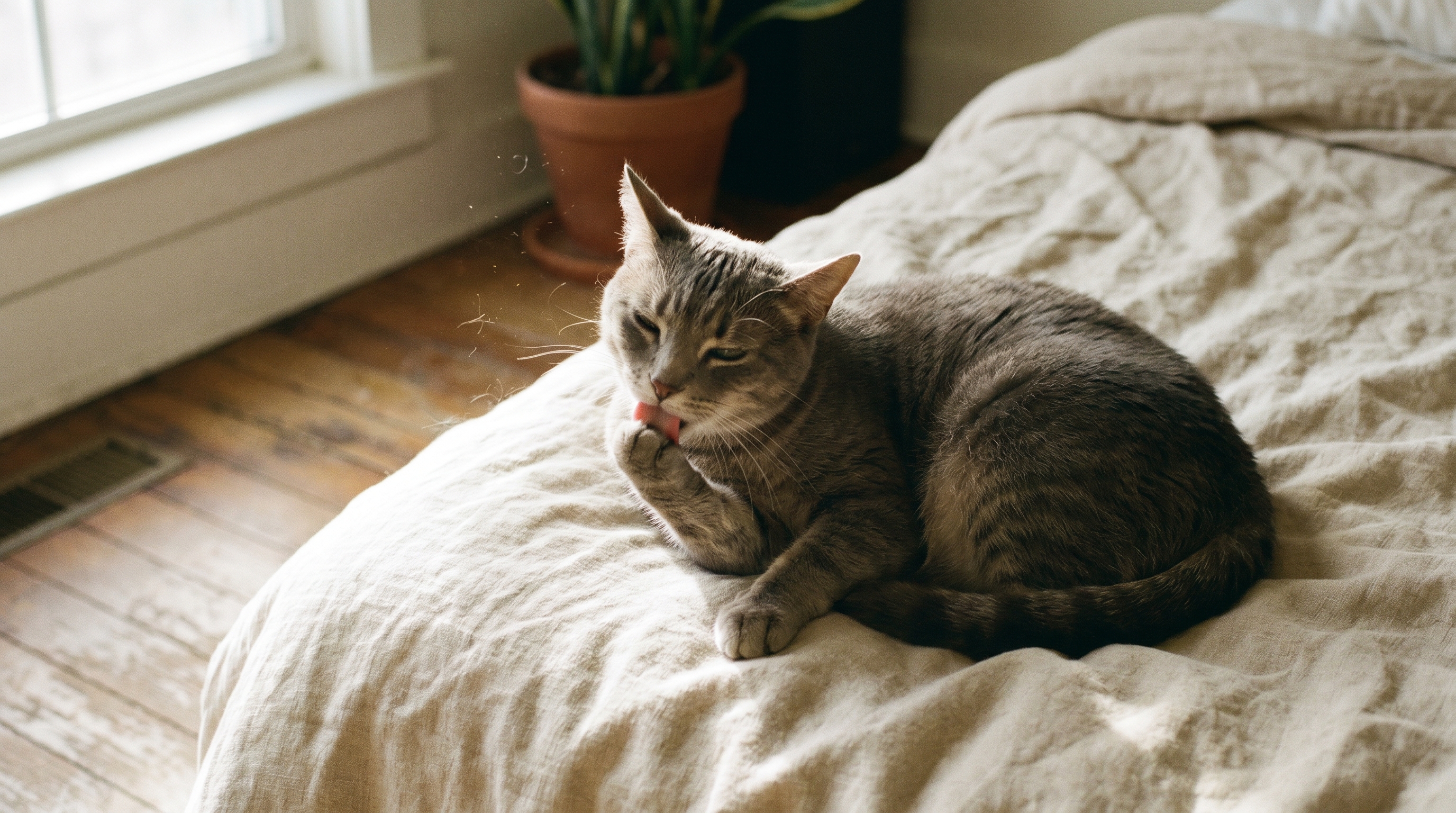
Grey tabby cat licking its front paw on a cream blanket after a natural cat wipe clean-up
She licks the next paw within the hour. That window is the test every cat owner runs without thinking.

Medically reviewed by Dr. Paula Simons, registered veterinarian. Updated June 19, 2026.

Natural cat wipes clean with a water base, a mild plant surfactant, and a few botanical extracts on a plant-fiber cloth, with no essential oils, fragrance, alcohol, or propylene glycol. Your cat licks it all off within the hour, so the label is the whole product.

A cat is not a small dog.

Most cat wipes are a fragranced baby wipe with a kitten on the box. Our plant-based pet wipes skip the essential oils, the line that matters most.

Natural cat wipes: why stricter for a cat?

Lick safety is the bar every natural cat wipe has to clear, because your cat eats the formula off her own coat. Cats are short on the UGT1A6 enzyme that other mammals use to clear many plant compounds, so essential oils and phenols build to doses a same-weight dog would shrug off.

That is why a dog wipe can carry tea tree, citrus, eucalyptus, or pine and stay inside a dog's tolerance, while the same cloth becomes a slow daily dose on a cat. ASPCA Animal Poison Control and Pet Poison Helpline both list essential oils as toxic to cats, including tea tree, citrus (the d-limonene and linalool kind), eucalyptus, pennyroyal, pine, and wintergreen.

The danger is not one wipe. It is the same low dose, groomed in twice a day, against a liver that clears it slowly. A compound that is a harmless splash on a dog turns into a cumulative load on a cat.

The FDA has never defined 'natural' for cosmetics or pet grooming products, so the word polices itself on the front of the box. The ingredient list, not the marketing, is the part worth reading.

A natural cat wipe runs the other way.

Water base. One mild plant surfactant such as decyl glucoside. A short list of low-strength botanicals like aloe, chamomile, and oat.

Before the first pack shipped, the formula was vet-designed and reviewed by Dr. Paula Simons (DVM) for cat and kitten lick safety. That review separates a wipe labelled safe from one checked for it.

A wipe that handles muddy paws on your dog can still be wrong for your cat. The safe list for the dog version of this question is wider than the one a cat gets.

A Judge.me reviewer in 2026 put the appeal in plain terms: gentle on her cat's skin, cleans without harsh chemicals. That is the only pitch that survives once the cat swallows the result.

Run the test yourself: she licks the spot within the hour, and whatever you wiped on is now inside her.

Natural cat wipes: what should the label skip?

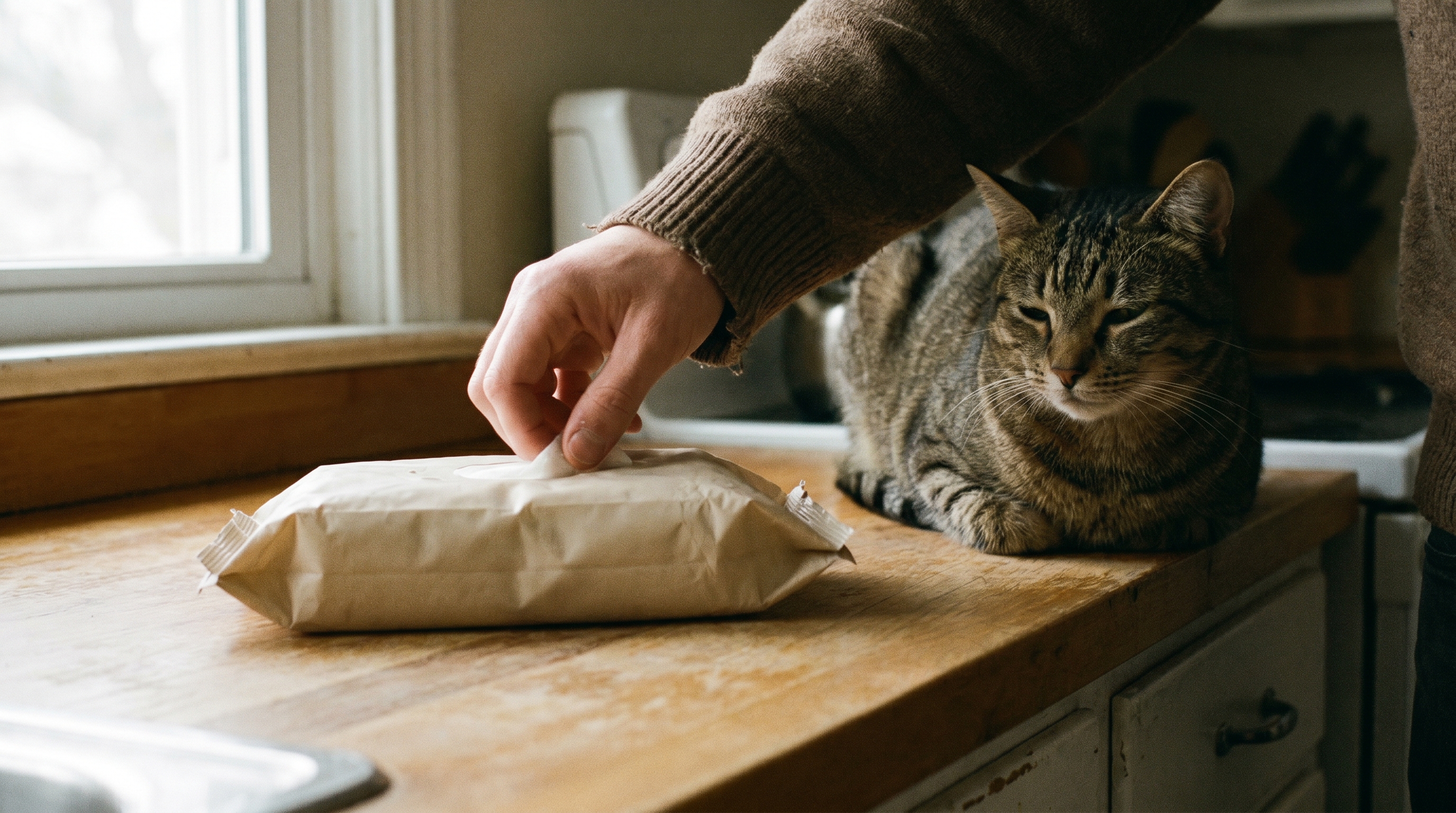
Cat owner examining the back of an unbranded wipe pack while a short-haired cat waits on the counter
The label is the product. With a cat, the back of the pack matters more than the front.

A natural cat wipe is defined by its cut list as much as its ingredient list. Six things have no business on a cloth your cat will lick.

  • Synthetic fragrance, which hides behind the single word 'fragrance' or 'parfum' and can stand in for dozens of undisclosed ingredients under US trade-secret labelling rules.
  • Alcohol, ethanol or isopropyl, which dries and stings broken skin and flashes off into the air she breathes.
  • Propylene glycol, which the FDA banned from cat food back in 1996 over links to red-blood-cell damage in cats.
  • Parabens and formaldehyde-releasing preservatives, the shelf-life shortcuts a gentler system can replace.
  • Synthetic detergents like sodium lauryl sulfate (SLS) and SLES, which clean by stripping the skin barrier.
  • Essential oils of any kind, for every reason in the section above.

Propylene glycol is the one most natural-leaning brands keep, because it carries surfactants and stretches shelf life. A cat-safe formula swaps it for glycerin and citric acid, both of which sit on a short, readable label.

Synthetic detergents are the same problem from the other end. SLS and SLES clean by stripping oils, and a stripped barrier is the surface her tongue drags across next. Plant sugar surfactants like decyl glucoside clean without that stripping effect.

A gentler preservative system does exist. Caprylyl glycol, gluconolactone, and sodium citrate hold a water-based wipe together without parabens or formaldehyde releasers, and they sit on a label you can read in one pass.

Fragrance is the one owners notice fastest. On Reddit, cat owners hunt for wipes that are 'safe for sensitive skin' and free of 'irritating fragrances'. In reviews, the complaint repeats when a wipe sold as unscented turns out to carry a strong smell.

A cat's nose beats yours. A scent you can barely register can be the thing that sends her under the bed instead of grooming.

Natural cat wipes vs synthetic: which cloth wins?

The cloth is half of what makes a wipe natural, and it is the half nobody reads. Most pet wipes ride on a polyester or polypropylene spunlace: a petroleum-based non-woven that will not break down in a backyard pile, and will not break down on the coat she grooms either.

A natural cat wipe uses a wood-pulp or plant-cellulose cloth instead: lyocell, viscose, or bamboo viscose. Lyocell comes from wood pulp run through a closed-loop solvent process that recovers and reuses most of the solvent.

Spunlace is just short fibers bonded together with high-pressure water jets into a sheet. On a synthetic web, it sheds plastic microfibers every time you use it and bin it. A plant-cellulose sheet sheds cellulose instead, which soil organisms can break down.

Our wipes are made with 100% VEOCEL™ Lyocell fibers, and those fibers carry independent compostability certifications on the fiber substrate itself. The full formulated product from GIVE A SH!T®, fiber plus cleansing solution, is not certified compostable as a whole yet; that certification is expensive and in progress. So the honest version is this: the material is certified, the whole product is not, and we will not blur the two.

Feature. 🧻 Natural cat wipe. Conventional pet wipe.
Cloth. Plant cellulose: lyocell, viscose, bamboo. Polyester or polypropylene spunlace.
Cleanser. Plant sugar surfactant, decyl glucoside. Synthetic detergent, SLS or SLES, common.
Fragrance-free. ✅ Yes. ❌ Often fragranced.
Essential oils. ❌ None. Sometimes present.
Lick-safe formula. ✅ Yes. Check the label.
Fiber breaks down in home compost. ✅ Fiber is certified. ❌ No.

Flip any pack over before you buy it.

If the fabric content is missing, assume polyester. If 'fragrance' is on the back, it is on your cat too. Owners who got tired of guessing tend to land where the rest do, somewhere between why owners switch from sticks to wipes and reading every label twice.

Natural cat wipes for kittens: how often is safe?

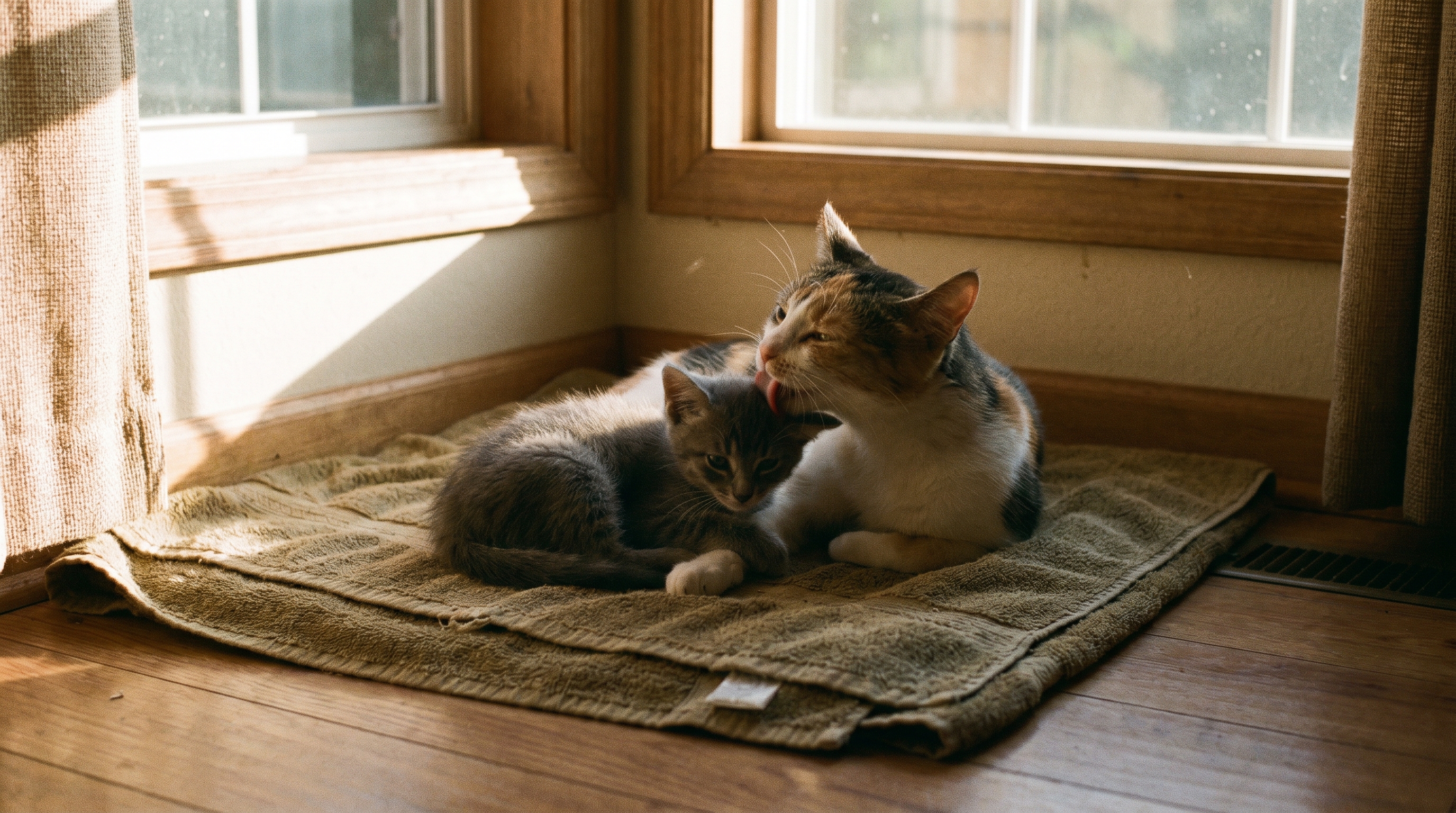
A young kitten curled against its mother cat on a folded towel, the mother cat mid-groom
Under eight weeks, the mother does the cleaning. A wipe waits its turn.

Under eight weeks, skip the wipes. A kitten that young is groomed by its mother, and for any mess she misses, a cloth dampened with warm water does the job without adding a formula at all.

From around eight weeks, a cat-safe wipe is fine for the spots a kitten cannot reach: a dirty bottom, litter stuck to a back leg, food smeared into a chin. The formula rules do not change with age. A kitten's smaller body just means a smaller margin, so the no-oils line matters even more.

'Can I use a wipe on my kitten?' is one of the most common questions cat owners type, and the answer is yes, with the same caveat as adults: read the cut list first. The same goes while you are litter-training a new kitten and cleaning up the misses.

The honest use cases are narrow: a muddy patch after she slips outside, litter granules stuck to fur, a greasy chin after wet food, a back end a senior cat can no longer reach. None of those need a bath. All of them need thirty seconds and one wipe.

Daily use is the other question owners ask, and the answer is yes for spot-cleaning. The limit is not poisoning her. Over-wiping the whole body strips her coat's natural oils, even with a gentle formula.

For most cats the right rhythm sits between 'after every litter trip', which is too often, and 'only at bath time', which is too rare. Once a day on a dirty spot, more when she gets into something, keeps her clean without wrecking her coat.

A quick clean-up, start to finish.

  1. Wipe in the direction the fur grows, never against it.
  2. Stick to the messy spot: paws, bottom, chin, a muddy patch.
  3. Let her air-dry; a no-rinse formula does not need washing off.
  4. Give her a minute, and she finishes the job with her tongue.

Heavy users run out fast, and a common review note on wipes is wishing the pack were bigger. Larger counts fix that, which is when cat wipes earn a place in your routine rather than a panic buy.

Senior cats and cats with 'dry, flaky skin and scabs' come up in support threads with one worry: will a wipe make it worse? A water-and-glycerin formula with aloe and oat is built to do the opposite.

We still do not know your cat's skin. Your vet does. A rash that keeps coming back is a vet visit, not a wipe.

One last thing before you buy anything: flip the pack over, and if the back lists 'fragrance', tea tree, citrus, eucalyptus, or any oil, put it down. She will be licking it off within the hour, and that hour is the only review that counts.

Natural cat wipes: the questions owners keep asking

Natural cat wipes: are they safe for cats?

Yes, when the formula carries no essential oils, fragrance, alcohol, or propylene glycol, uses a mild plant surfactant, and rides on a plant-fiber cloth. The reason the bar is high is plain: your cat licks it off and swallows whatever is left.

Daily use: can you wipe a cat every day?

Daily spot-cleaning is fine with a gentle, fragrance-free formula. Skip the full-body rubdown every day, since over-wiping can strip the natural oils that keep a coat healthy.

Cat wipe ingredients: what should you avoid?

Essential oils, synthetic fragrance or 'parfum', alcohol, propylene glycol, parabens, and detergents like SLS and SLES. Cats process several of these slowly, so they build up with repeated licking.

Kittens: can you use a natural wipe on one?

Under eight weeks, use warm water and let the mother groom. From eight weeks, a cat-safe wipe with no essential oils is fine for the spots a kitten cannot reach.

Cleaning power: do natural cat wipes actually work?

They lift surface dirt, dander, litter dust, and light mud, and they deodorise. They are a clean-up tool between baths, not a replacement for a full wash on a heavily soiled cat. For day-to-day fur, a quick wipe handles most of what a busy cat tracks in.

Dog wipes on cats: are the 'natural' ones safe?

Not always. A wipe made for dogs can carry tea tree, citrus, or eucalyptus oil that a dog tolerates and a cat cannot. Check the ingredients before using a dog wipe on a cat.

Lick-safe formula: what makes a wipe one?

No essential oils or phenols a cat's liver struggles to clear, no fragrance, no alcohol, and a mild plant-based surfactant. If every ingredient is safe to be groomed off and swallowed, the wipe is lick-safe.

Would you like to leave a comment?

Please note, comments need to be approved before they are published.

WHY PEOPLE LOVE IT

Cat Wipes: When to Use Them, What's Safe, and How to Avoid the Bath War

Cat Wipes: When to Use Them, What's Safe, and How to Avoid the Bath War

Cat wipes are pre-moistened cloths for spot-cleaning a cat's coat, paws, and facial folds without water. Learn when to use...

Compostable cat litter bags: tray liners vs. disposal bags

Compostable cat litter bags: tray liners vs. disposal bags

Compostable cat litter bags come in two formats: tray liners for the weekly box change and XL disposal bags for...

Eco-Friendly Dog Poop Bags: What Certification Actually Proves

Eco-Friendly Dog Poop Bags: What Certification Actually Proves

Most eco-friendly dog poop bags make claims they can't back up. Here's how to spot the certifications that actually matter:...

Compostable Pet Waste Bags: What Certification Means and Why the Material Matters

Compostable Pet Waste Bags: What Certification Means and Why the Material Matters

Most ‘compostable’ pet waste bags are uncertified. Learn what TÜV Austria and ASTM D6400 actually mean, and how GIVE A...

Best dog wipes for paws: what actually works after a muddy walk (2026 guide)

Best dog wipes for paws: what actually works after a muddy walk (2026 guide)

The best dog wipes for paws use plant-based VEOCEL™ Lyocell fibers and a fragrance-free, lick-safe formula. Here's what separates a...

No More Dirty Paws: From Sticks to Wipes

No More Dirty Paws: From Sticks to Wipes

Dogs and sticks? A timeless romance. But at Give A Sh!t, we think wood can do more than fuel fetch....

The Growing Movement Towards Cruelty-Free Pet Care
  • #eco
  • #eco friendly

The Growing Movement Towards Cruelty-Free Pet Care

Choosing cruelty-free pet care isn’t just about pampering your furry friends—it’s about standing up for animals, embracing safer, natural ingredients,...

Eco-Friendly Pet Grooming: Why It Matters and How to Start
  • #bath
  • #bathe a puppy

Eco-Friendly Pet Grooming: Why It Matters and How to Start

Discover how your pet's grooming routine impacts the planet and explore simple, eco-friendly solutions. From reducing plastic waste to using...

Pareto Principle in Pet Care: Smart Budgeting for Your Furry Friends
  • #dog owner
  • #dogs

Pareto Principle in Pet Care: Smart Budgeting for Your Furry Friends

Feeling like pet expenses are piling up? With the 80/20 rule, you can focus on essentials, cut out the extras,...

Why Your Pet’s Skin Deserves Better: The Impact of Cheap Pet Products
  • #dog health
  • #wipes

Why Your Pet’s Skin Deserves Better: The Impact of Cheap Pet Products

Cheap pet products may seem like a bargain, but they often contain harsh ingredients that can harm your pet's skin...

My Dog Won't Eat: Addressing Your Dog's Appetite Issues

"My Dog Won't Eat": Addressing Your Dog's Appetite Issues

Is your dog refusing to eat? Discover the common causes and practical solutions to help your furry friend regain their...

Dog Friendly Plants: Creating a Safe Haven for Your Pets
  • #dog health
  • #tips for dogs owners

Dog Friendly Plants: Creating a Safe Haven for Your Pets

Discover beautiful, dog-friendly plants that will brighten your home without posing a risk to your pets. Learn how to create...

The Dangers of Artificial Fragrances in Pet Products
  • #bath
  • #bathe a puppy

The Dangers of Artificial Fragrances in Pet Products

Many pet products contain artificial fragrances that can harm your pet’s health. Learn about the dangers of synthetic scents, how...

Air Dried Dog Food: The Ultimate Guide to a Healthy and Nutritious Diet
  • #dog food
  • #dog recipes

Air Dried Dog Food: The Ultimate Guide to a Healthy and Nutritious Diet

We constantly seek the best nutrition for our furry friends. One option that has gained popularity in recent years is...

Kennel Cough: What Every Dog Owner Needs to Know
  • #dog health

Kennel Cough: What Every Dog Owner Needs to Know

Discover everything you need to know about kennel cough, from symptoms to treatment and prevention. Keep your furry friend healthy...

Spooktacular Pet Costumes: Halloween Fun for Cats and Dogs
  • #cat fashion
  • #cat owner

Spooktacular Pet Costumes: Halloween Fun for Cats and Dogs

Celebrate Halloween with your furry friends! From adorable cat costumes to spooky dog accessories, discover how to make your pets...

Black Cat and Halloween: Busting Myths and Protecting Our Feline Friends
  • #cat owner
  • #cat tips

Black Cat and Halloween: Busting Myths & Protecting Our Feline Friends

Black cats and Halloween have a long, misunderstood history. In this post, we debunk myths, raise awareness about their safety...

Harmful Chemicals in Pet Shampoos: What You Need to Know
  • #bath
  • #dog bath

Harmful Chemicals in Pet Shampoos: What You Need to Know

Discover the hidden dangers in many pet shampoos that could be compromising your pet’s health. Learn about common harmful chemicals,...

How World Animal Day Can Inspire Us to Take Action for Animals and the Planet
  • #dogs
  • #eco

How World Animal Day Can Inspire Us to Take Action for Animals and the Planet

Celebrate World Animal Day by learning how small, everyday actions can make a big impact on animal welfare and the...

Understanding Rabies Disease: A Vital Guide for Pet Owners and Animal Lovers
  • #dog health

Understanding Rabies Disease: A Vital Guide for Pet Owners and Animal Lovers

Rabies is a deadly viral infection that affects both animals and humans, with fatal consequences if not treated promptly. Learn...

Family Run Start-Up

Earth friendly

Recycled Materials

Cruelty Free Peta Certified