


Discovering the milestones in a puppy's early life is one of the true joys of pet ownership. One of the most delightful moments is witnessing their first steps. This article will guide you through when do puppies start walking and how you can support their journey to becoming agile and adventurous companions.f
Understanding Puppy Development Stages
When do puppies start walking? The process begins from birth and progresses through several developmental stages:
Newborn Stage (0-2 Weeks)
At this stage, puppies are immobile, focusing on feeding and staying warm. They are not yet ready to start walking.
During this critical period, puppies rely entirely on their mother for survival—receiving warmth, nourishment, and protection. Their muscles and bones are developing, but they lack the strength and coordination to stand or walk.
This stage is essential for their initial growth as they prepare for the significant milestones ahead. Observing them during this period provides valuable insights into their health and developmental progress.
Transitional Stage (2-4 Weeks)
This is when the magic starts to happen. As their senses develop, puppies begin trying to walk, albeit wobbly at first.
Their eyes and ears open, enhancing their interaction with the world around them. Their initial movements are often uncoordinated, but each attempt is a step towards gaining the necessary muscle strength and coordination.
Puppies start to respond to sounds and movements, which stimulates further physical development and sets the foundation for more robust walking abilities. This stage is crucial for their confidence and motor skills' development.
Socialization Stage (4–8 Weeks)
By now, puppies are not only walking but starting to play and explore actively. This period is crucial for their interaction with people and other animals.
It's a time when they learn vital social cues and behaviors that will influence their future interactions.
Puppies begin to explore their environment more robustly, encountering new textures, smells, and sounds that are essential for cognitive development.
Exposure to gentle handling by humans and playful interactions with other puppies or safe adult dogs helps them learn appropriate social behaviors, establishing a solid foundation for well-adjusted adult dogs.
Active Learning Stage (8-12 Weeks)
Puppies become more coordinated. It is during this time that when do puppies start walking turns into them running and playing more confidently.
It's the critical time for introducing basic training such as sit, stay, and come, which not only helps in behavioral development but also strengthens their physical abilities.
Their enhanced coordination allows for more complex movements and challenges, such as navigating obstacles or playing with more intricate toys.
Engaging in these activities helps to refine their motor skills further and builds their confidence and independence, setting the stage for a more advanced exploration and learning experiences.
The First Steps: How Puppies Learn to Walk
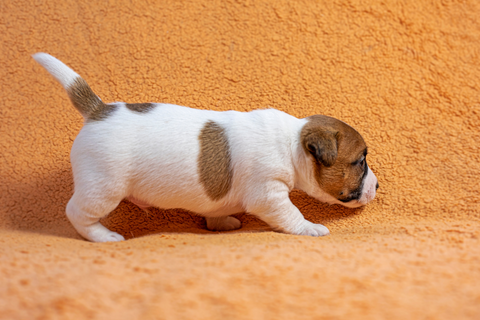
When do puppies start walking? Typically, they begin to stand and make their first wobbly attempts around the 3-week mark. These initial steps mark the beginning of muscular and neurological development essential for more complex movements.
Their initial steps are unsteady, but with regular practice, their coordination improves dramatically.
Creating a safe environment is key to nurturing these early attempts. Soft bedding helps prevent injuries during their falls, while a hazard-free area with minimal obstacles allows them to explore without fear.
Providing a variety of surfaces like carpet, tile, and grass can also help puppies adapt to different textures underfoot, enhancing their sensory and motor skills.
Encouraging their efforts with gentle support and positive reinforcement will boost their confidence, aiding in quicker learning and development. This stage not only prepares them for physical activities but also for social interactions and obedience training in later weeks.
Monitoring for Mobility Issues
When tracking the milestone of when do puppies start walking, it's important to be vigilant for any signs of mobility issues.
If a puppy isn't walking by the fourth week, this could be a red flag indicating a potential health problem that requires prompt veterinary attention.
Common signs to look out for include:
- Reluctance to move.
- Whimpering.
- Signs of discomfort when trying to stand.
- Uneven gait.
Early diagnosis and intervention are vital for managing these issues. A thorough assessment by a veterinarian might include neurological exams and imaging like X-rays to pinpoint the exact cause.
Effective early treatment can significantly improve outcomes, ensuring the puppy has the best chance to walk normally and lead a healthy life.
Regular monitoring and following a vet’s advice also help prevent complications as they grow.
Engaging with a physical therapist or considering supportive therapies like hydrotherapy might be recommended to enhance muscle strength and coordination in cases of chronic conditions.
Preparing for the First Walk
Regarding when do puppies start walking outside on a leash, it's best to wait until they are well vaccinated.
Typically, the first walk should happen two weeks after their final vaccinations, around 18 weeks of age.
Start with indoor leash training and gradually introduce outdoor walks in secure areas.
How Much Exercise Does a Puppy Need?
Even after puppies start walking, their exercise needs should be monitored closely. Their physical activity should match their developmental stage:
- 8 Weeks Old: Less than 15 minutes per walk
- 12 Weeks Old: 15–20 minutes per walk
- 6 Months Old: Up to 30 minutes per walk
- 1-Year-Old: Up to 45 minutes per walk
- Adult Dogs: 30 minutes to 1 hour per walk
Observe your puppy for signs of fatigue and adjust their exercise accordingly. When do puppies start walking confidently varies by breed and individual growth, so personalized care is essential.
Understanding when do puppies start walking is crucial for any pet owner. This milestone is just the beginning of a journey towards a healthy and active life.
By providing a supportive environment, proper health care, and appropriate exercise, you help ensure your puppy grows into a happy and energetic companion, ready to explore the world by your side.
FAQ
Should Puppies Be Walking at 3 Weeks?
Yes, puppies typically start making their first wobbly attempts to stand and walk around 3 weeks old.
What to Expect From a 2-Week-Old Puppy?
Expect a 2-week-old puppy to be mostly immobile, focusing on feeding and staying close to its mother for warmth and protection.
Can I Take My 10-Week-Old Puppy for a Walk?
Yes, but keep walks short and ensure your puppy is in a safe, controlled environment as it may not be fully vaccinated yet.
Is It OK to Walk a 12-Week-Old Puppy?
Yes, walking a 12-week-old puppy is generally safe if they have started their vaccination schedule, but keep the walks short and gentle.
Is It OK to Pick Up 2-Week-Old Puppies?
It is generally safe to gently pick up 2-week-old puppies, but always handle them with care and ensure their heads are supported.
Should I Carry My Puppy Out to Pee?
Yes, carrying your puppy to a designated pee area can help with house training, especially before they have full control of their bladders.


